SalonSync — A walk-in-first salon operating system
Designing for the customer who just walked in, the technician mid-service and the manager holding it all together, at the same time
Role
Solo Product Designer
Research
Strategy
UX
Company
Family-owned nail salon
Scottsdale, AZ
Tools
Figma, HTML & CSS, Zapier, Notion, Webflow, Tally,
Timeline
Live deployment
In progress
Overview
The whole operation ran on one person knowing everything.
SalonSync is a full POS replacement for nail salons that combines a customer kiosk, a wait display, a manager dashboard, and a technician mobile brief — built around auto-delegation, fairness logic, and structured service capture.
The Challenge
Helping a family-owned salon where 80% of customers are walk-ins run a smooth shift without depending on the owner being at the front desk for every decision — while keeping the team feeling fairly treated.
" I have to feel the customer, easy or difficult, and match them to the right person. If I get it wrong, the technician gets angry."

Howard Nguyen
Owner, Cartier Nails & Spa
Final Product
Key Feature 1
Auto-Delegation
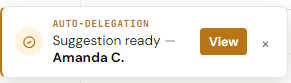
The owner used to make six decisions in his head every time someone walked in. We wrote his logic down, in order, and let the dashboard surface a recommendation the manager can override with the reason logged.
Auto Delegation Feature
1
Review Auto-delegation suggestions
2
Accept suggestions
Hover to see interaction
Delegation notified and updated
Hover to see interaction
Key Feature 2
Customer Kiosk
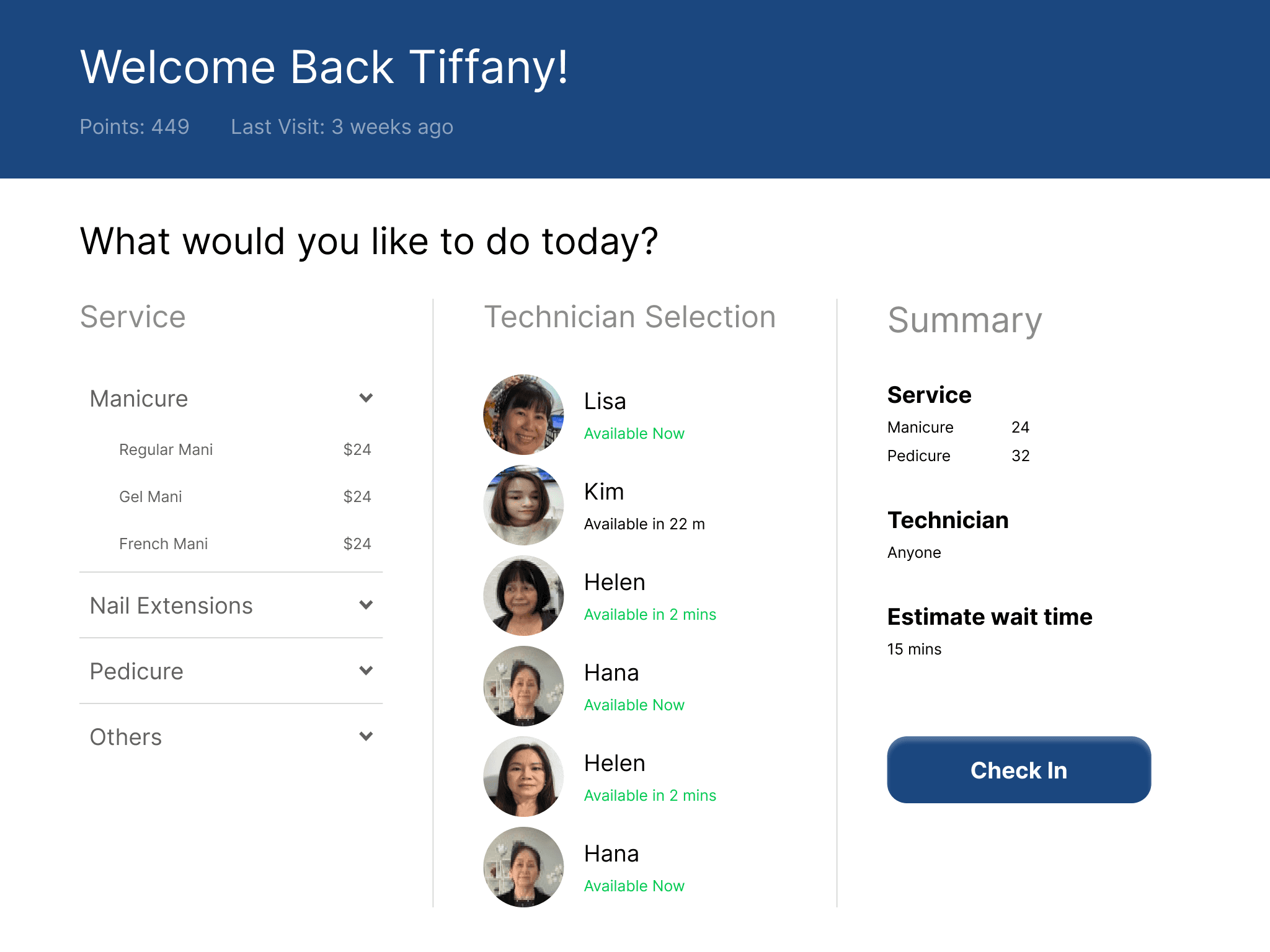
A one-screen check-in that captures service intent, preferred technician, and language — replacing the stalling workaround with a structured handoff. English / Vietnamese, designed for low-literacy first-time use.
Key Feature 3
Technician Service Brief
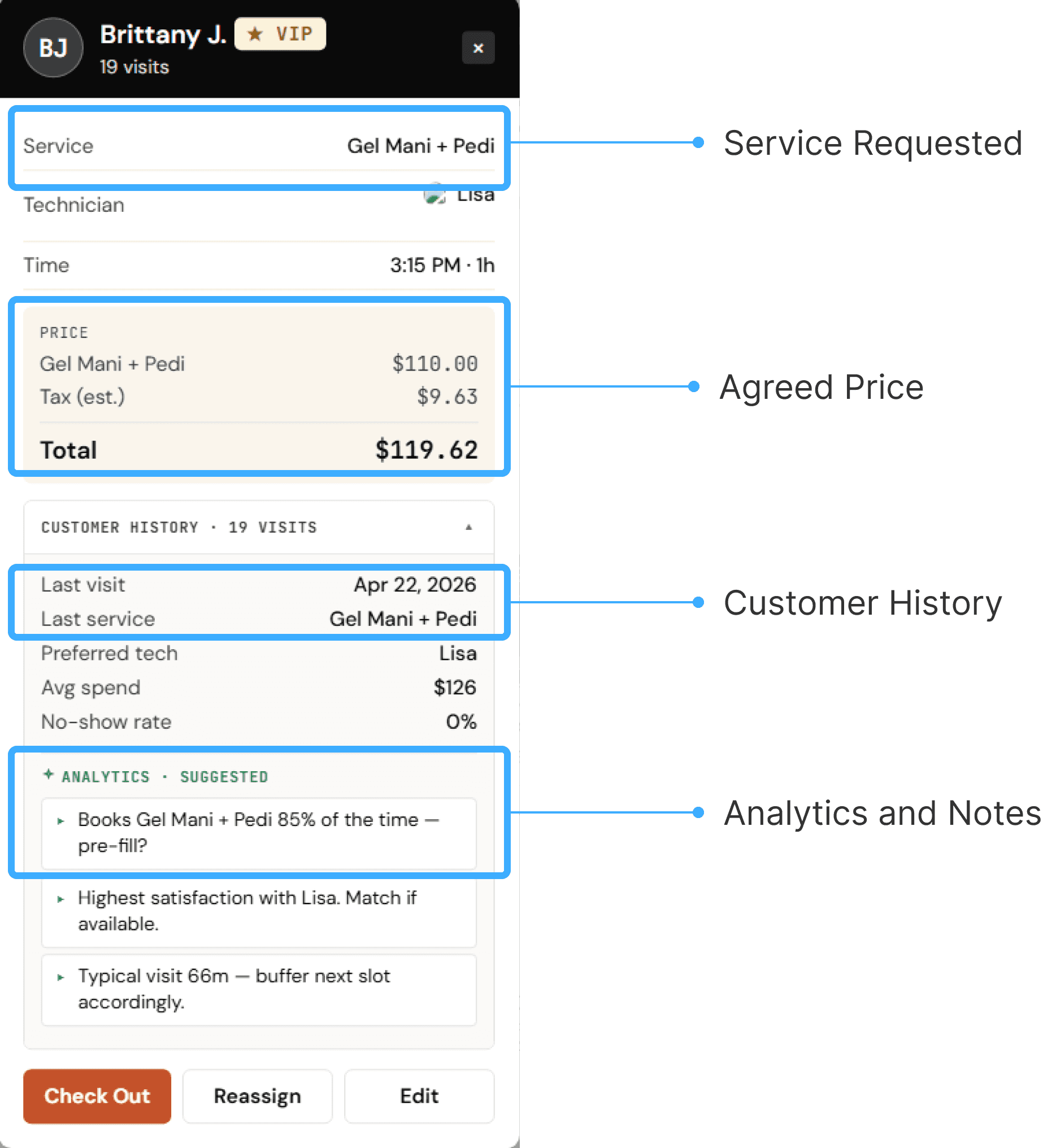
A pocket brief delivered the moment a customer is delegated
RESEARCH
Every salon tool is built for appointments but up to 80% of this business is walk-ins
Competitor home page highlight appointment feaure
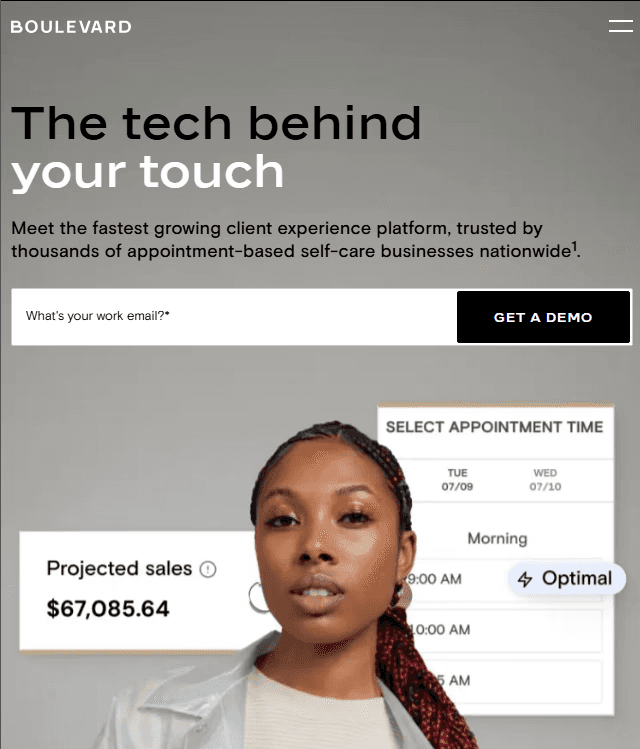
"..trusted by thousands of appointment-based selfcare businesses…"
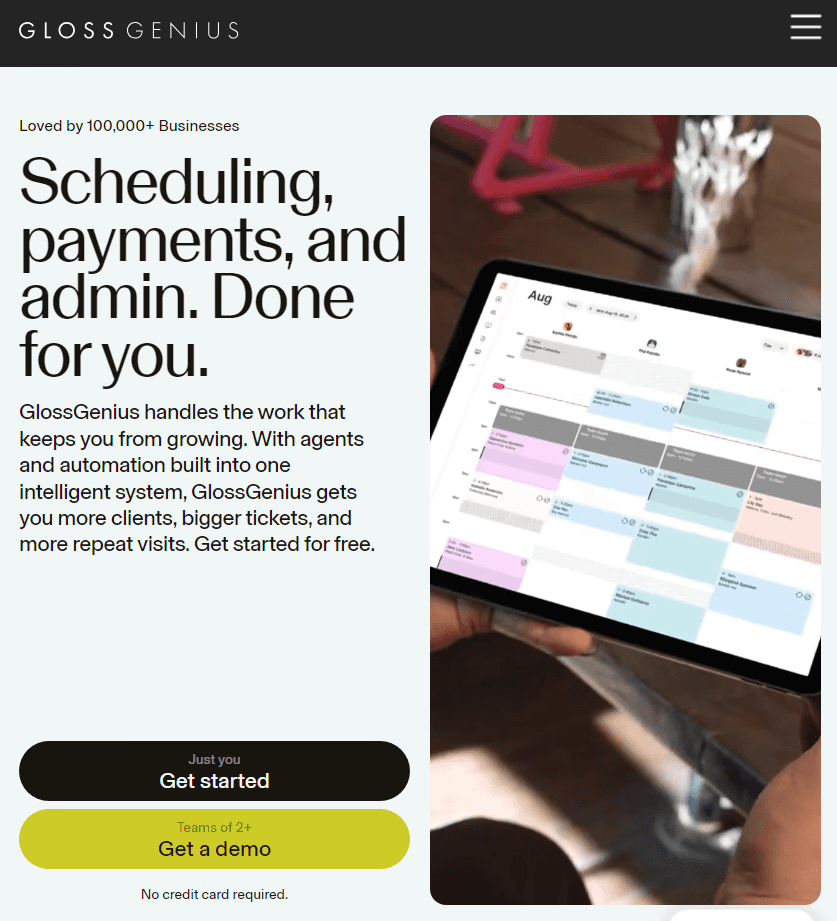
"Scheduling, payments and admin"
The market had solutions. None of them were built for this.
Interviews
Six sources.
One operation.
Every account different from the last.
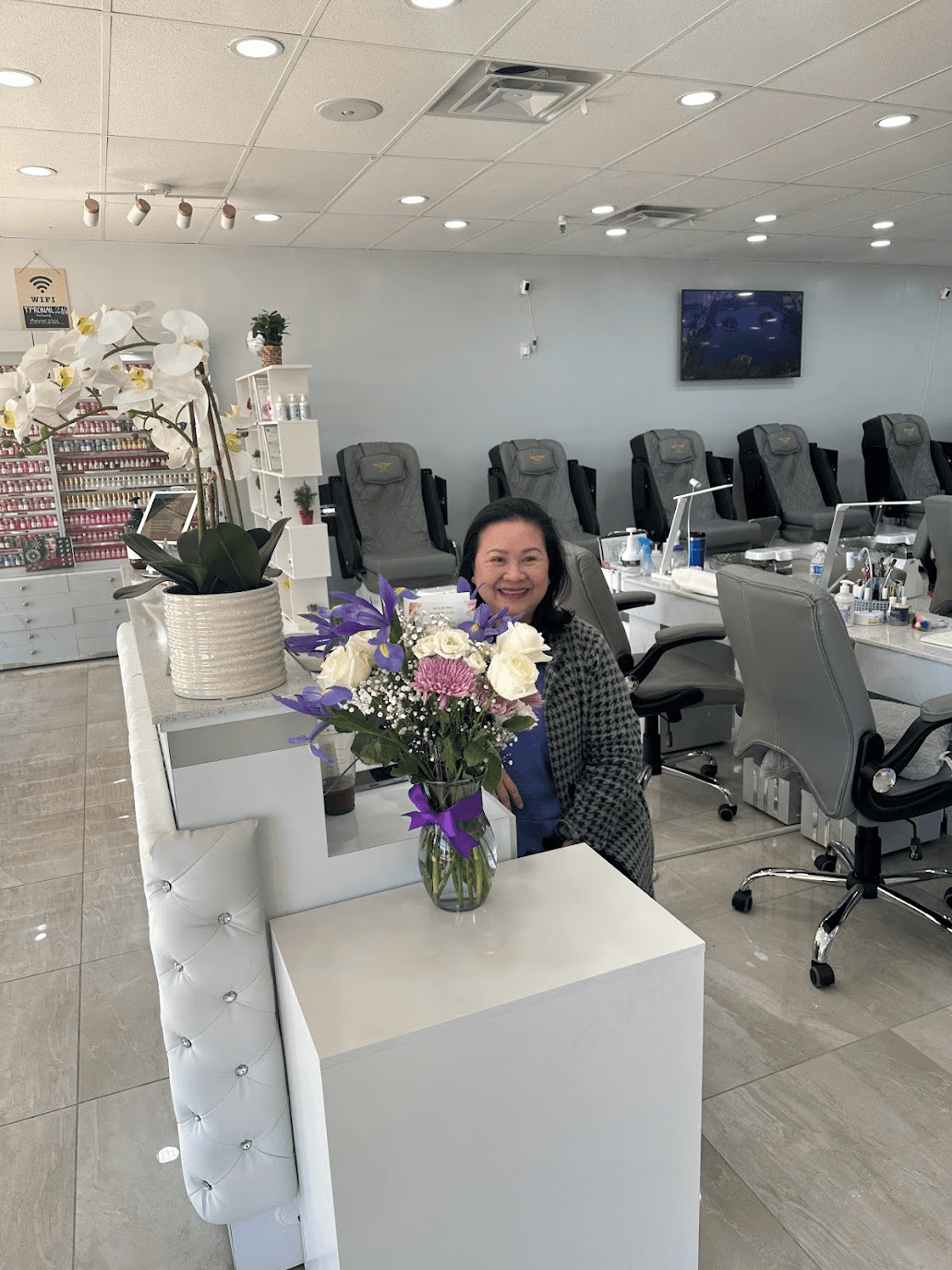
OWNER INTERVIEWS
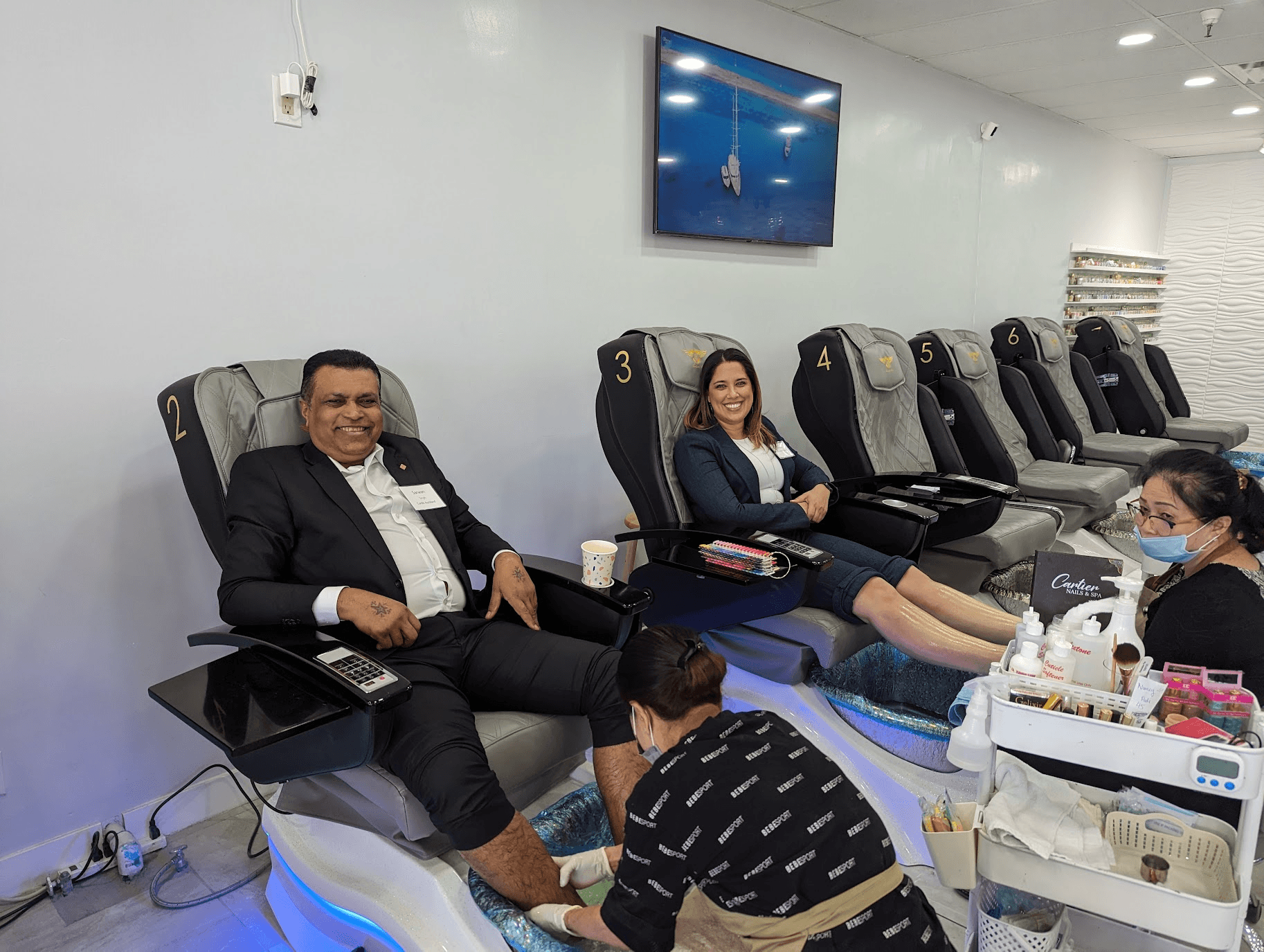
AUTOETHNOGRAPHIC
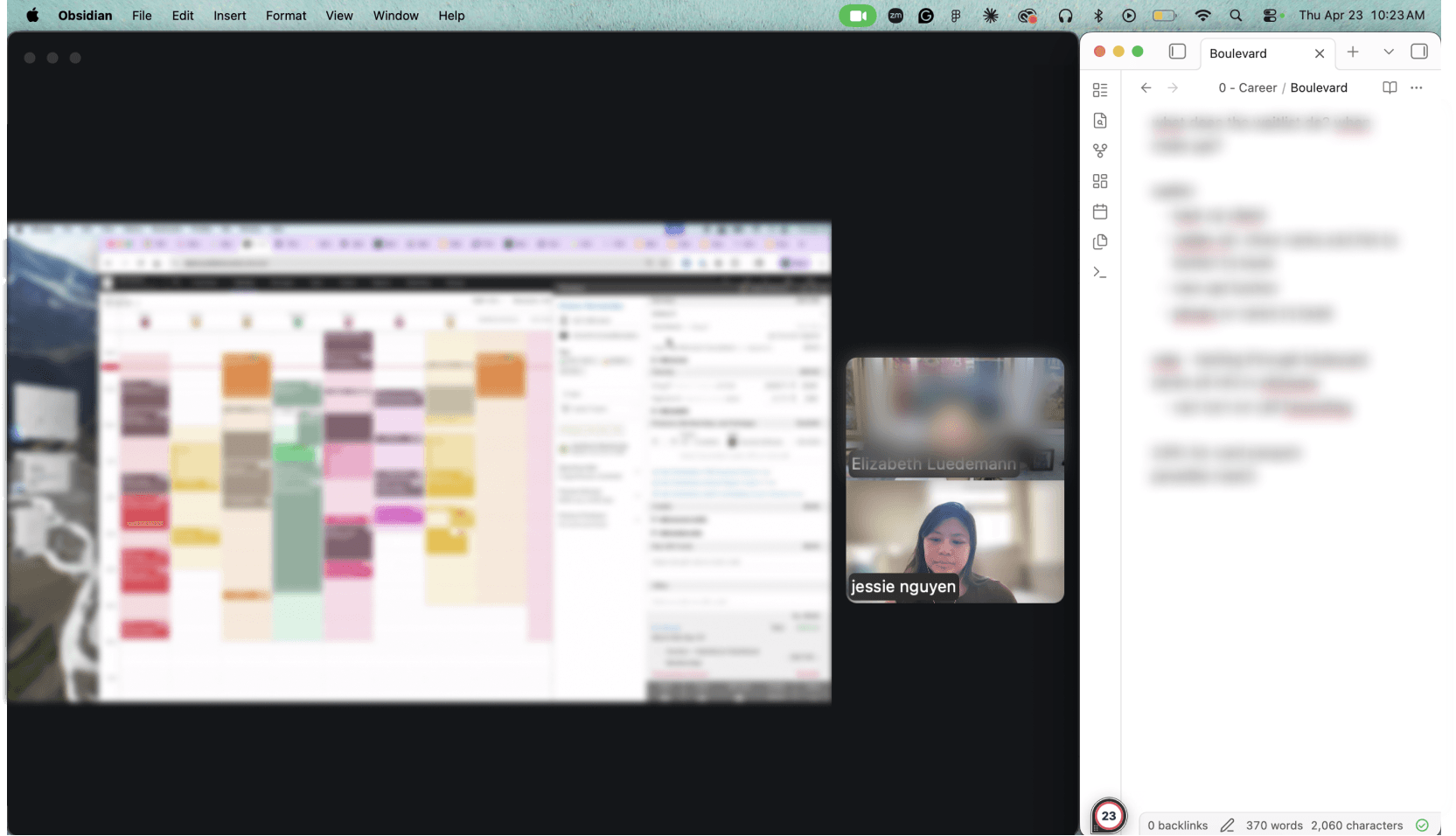
BOULEVARD DEMO
Source Type
What it revealed
How I got there
01 Owner interviews
Two people running one salon with no handoff
Bilingual scripts, separated interviews, gaps between accounts treated as data
02 Autoethnographic
I worked the front desk before I studied it
Three weeks behind the desk, field notes written after every shift before debrief
03 Boulevard demo
Even the best competitor confirmed the gap
Sales call reframed as structured research and observed which scenarios the product couldn't handle
04 External owner
Same problems, different salon
Confirms delegation logic, floor-scan workaround, manager dependency, pricing enforcement gap
05 Receptionist
The person closest to the problem described the solution without being asked
Unprompted suggestion at interview later became the kiosk spec
06 Senior technician
The person who knew the customers best had no channel to surface what he knew
Hybrid receptionist / technician role — most customer context on the floor, no system to externalize it
No single seat saw the whole problem.
Owner saw the dollars
Technician saw the customer
Receptionist saw the door
Customer saw their kiosk
RESEARCH FINDING
Five sources pointed at the same four problems.
INSIGHT
01
The operation had no fallback
Owner interviews
Autoethnographic
Receptionist
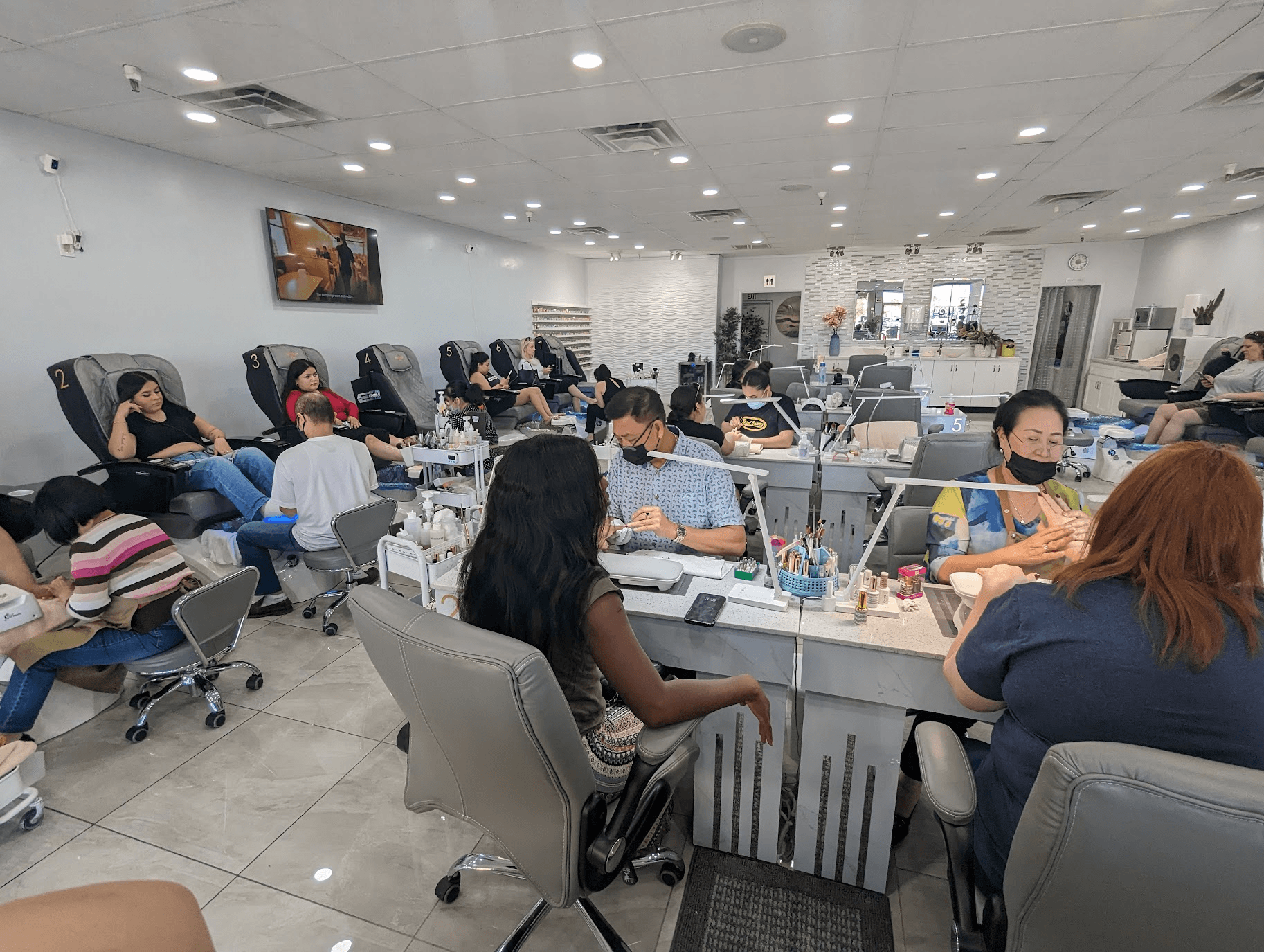
How much is this service?
Is there time for a mani?
When is my next appointment?
When the owner wasn't available, nothing worked. Pricing questions, service matching, translation, conflict resolution — every breakdown routed to one person whose process was entirely undocumented.
The system was fragile because the intelligence was never written down.
INSIGHT
02
The software made the wrong behavior the default.
Audit
Autoethnographic
Receptionist
Check Out Flow Options
Manicure
Regular
+24
Gel Polish
+10
Pedicure
Deluxe
+55
Charge Total
89
More Clicks
Data preserved
Custom Value
$0.00
Input Value
+89
Charge Total
89
3 Clicks
No service data
Under pressure, every operator took the fast path
For years of no service names attached — rendering customer data nearly useless for personalization, analytics, or continuity of care.
INSIGHT
03
Technicians were set up to execute without enough information
Owner interviews
Technician
Audit
No screen told a technician what service they were about to perform, what the customer preferred, or what it would cost. They received a customer and proceeded on inference. When they were wrong, the gap didn't surface until checkout — or not at all.
INSIGHT
04
Fairness isn't a preference. It's what keeps the team intact.
Technician
Owner interviews
Autoethnographic
Unexplained decisions — a skipped turn, a reassigned customer — produced sabotage, theft, and turnover. Not because technicians were unreasonable, but because the system gave them no visibility into why decisions were made. Perceived unfairness is an operational risk, not a morale issue.
" I think it's better if the customer types in what they want in the system. So it's already set up for me."

Tristyn Tra
Receptionist, External Nail Salon
Journey map across three roles
ARRIVAL
CHECK IN
WAIT
HANDOFF
SERVICE
CHECKOUT
Customer
Hopeful, uncertain
No signal that anything is happening
Hopes reception understands
Unsure if they're in the queue
Scanning the room for availablity
Re-explain service
Moving to the chair uncertain
Watching closely
No easy way to flag a concern without creating tension
Price may not match expectation
No summary to reference
TECHNICIAN
Focused on current customer
Unaware a new customer just walked in
Still unaware
Has not been told anything yet
Told verbally in passing that someone is coming
Receives a name and a rough service type
No written brief
No preference history
Executing on incomplete information
Guessing where needed
Hands off customer to checkout
MANAGER
Alert
Start thinking about delegation immediately
Translating, matching, estimating, stalling — all at once
Buying time
Watching two things simultaneously
Already at the next customer
Cannot monitor this handoff
Occupied
One escalation away from being pulled back in
Reconstructing what happened from memory
Resolving disputes on the fly
Broken incumbent — System audit
NailSolutions does one thing adequately. Everything else it does wrong or not at all.
I audited the incumbent across four flows
Check in
Customer
Delegation
Mid-service
changes
Check-out
Customer
"You checked in. You don't know if anyone knows you're here."
Technician
"You don't understand the request. You proceed anyway."
Manager
"You are the only thing standing between the operation and collapse."
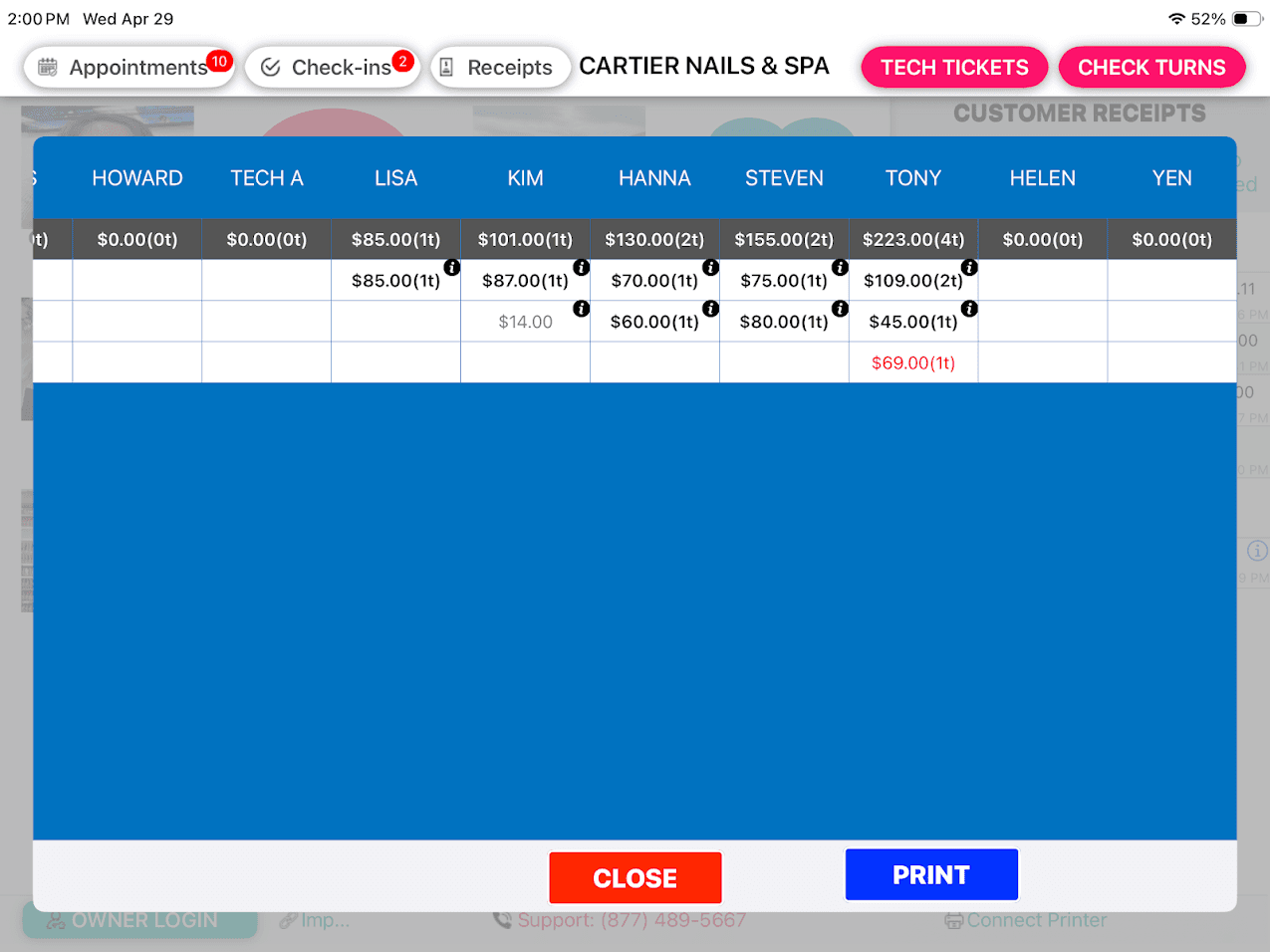
Artifact 1 — Check Turns modal
Delegation failure
The most-used screen in the salon. Zero support for the 6-step process it's supposed to replace
Who should the next customer go to?
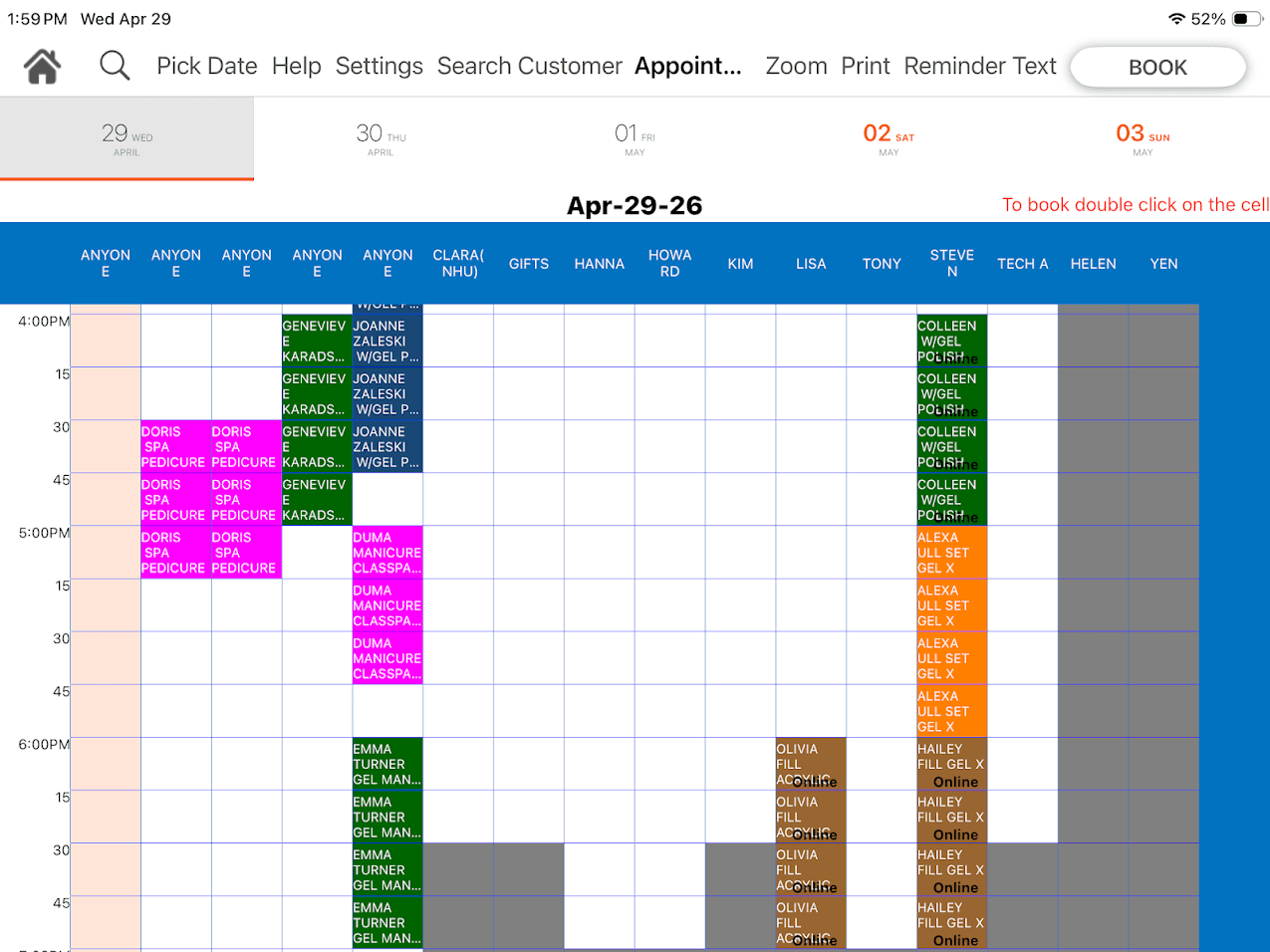
Artifact 2 - Schedule view
Walk-in invisibility
"80% of customers don't appear on this screen.
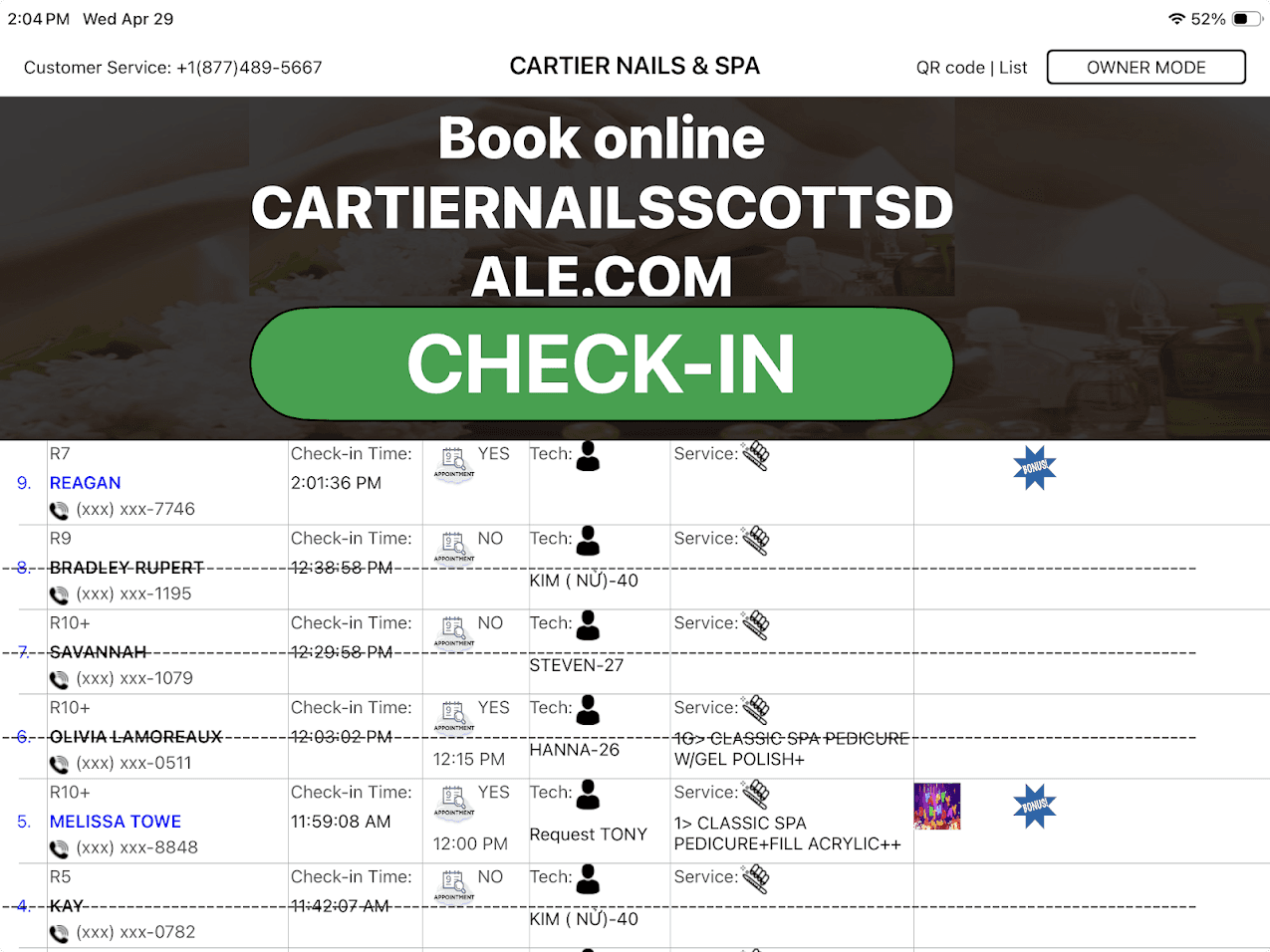
Artifact 3 - Customer kiosk
Customer experience failure
The check in screen does not provide
wait time
queue information
customer information
Artificat 4 - Service selection + custom amount modal
Data integrity failure
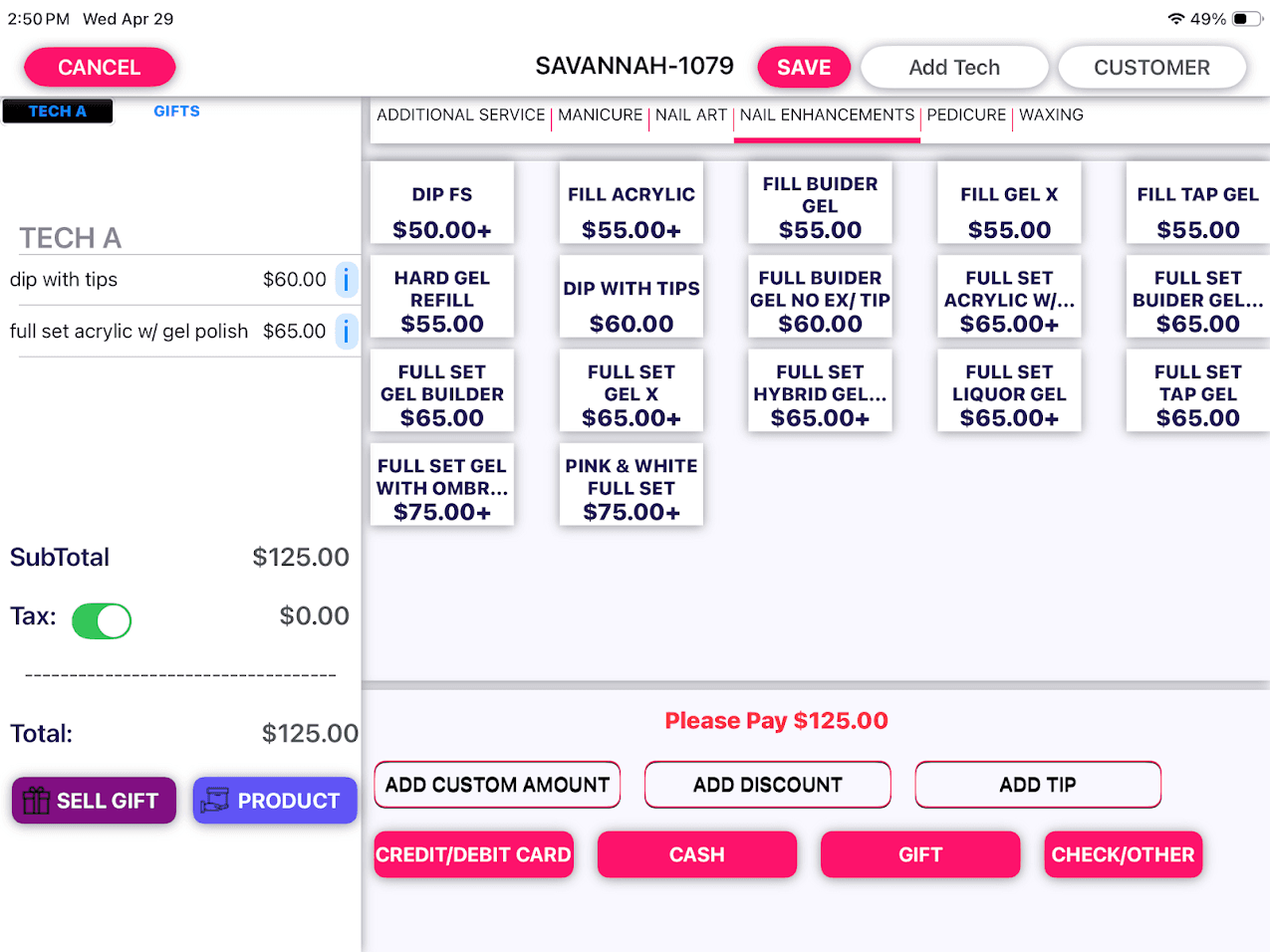
"ADD CUSTOM AMMOUNT" is the quickest way to charge a customer
Lost customer data
Lost analytics opportunity
Lost customer service history
Problem statement
How might we
Design a salon operating system that serves the customer, the technician, and the manager without asking any of them to hold the system together?
How it works
Three layers. Each fails on its own. Together, they hold the operation.
Layer 01
Auto-delegation
Who gets the customer. Owner-in-the-head logic, formalized as six rules with manager override.
Layer 02
Wait communicatio
What the customer is told between check-in and chair. Status, name, ETA — visible to everyone.
Layer 03
Service clarification
What the technician sees before the customer sits down. Brief, preference, agreed price.
Centerpiece Feature
Owner's instinct, formalized as 6 rules
Every walk-in triggers a decision the owner used to make in his head. The dashboard now surfaces it as a recommendation, with the reason in plain language. The override is the point. Auto-delegation isn't autopilot, it's instinct made visible.
Howard Mental Delegation Model
1
Hard skill and service match
Non-negotiable filter. Does this technician have the capability to perform the requested service?
2
New customer flag
Override the queue to the highest-skilled available technician. New customer retention outweighs short-term fairness
3
Returning customer preference
Surface that history and factor it in where possible
4
Availability and wait time
Is the best match available within an acceptable wait threshold?
5
Earnings equity
Among equally qualified and available technicians, prioritize the one with the lowest shift earnings
6
Shift arrival order
Final tiebreaker when everything else is equal. The technician who arrived first gets the next customer.
Delegate Customer to Technitian
Final tiebreaker when everything else is equal. The technician who arrived first gets the next customer.
" Just say it. That's all it takes."
Senior technician
on why unexplained skips cause conflict
PRODUCT VISION
One system. Management of 3 groups
V1 Scope
The minimum to run a shift, plus the one feature that makes switching worth it
V1 · Must-haveS
The minimum to run a shift
Walk-in check-in (kiosk)
Wait display
Manager dashboard with manual delegation
Service-locked checkout
Bilingual UI (English / Vietnamese)
V1 · DifferentiatoR
Auto-delegation
Six-step recommendation engine
Manager override with logged reason
Earnings-equity rebalance, visible on technician mobile
Service-locked checkout
Audit trail surfaced to the team
V2 · Next
What earns the second pass
Technician mobile brief (full version)
Customer-side preference memory
Tip distribution model
Inventory tied to service taxonomy
V3
Not this product yet
Customer-side native app
Online booking marketplace
Marketing automation